North facing or south facing: choosing colours for London light
· 3 min read
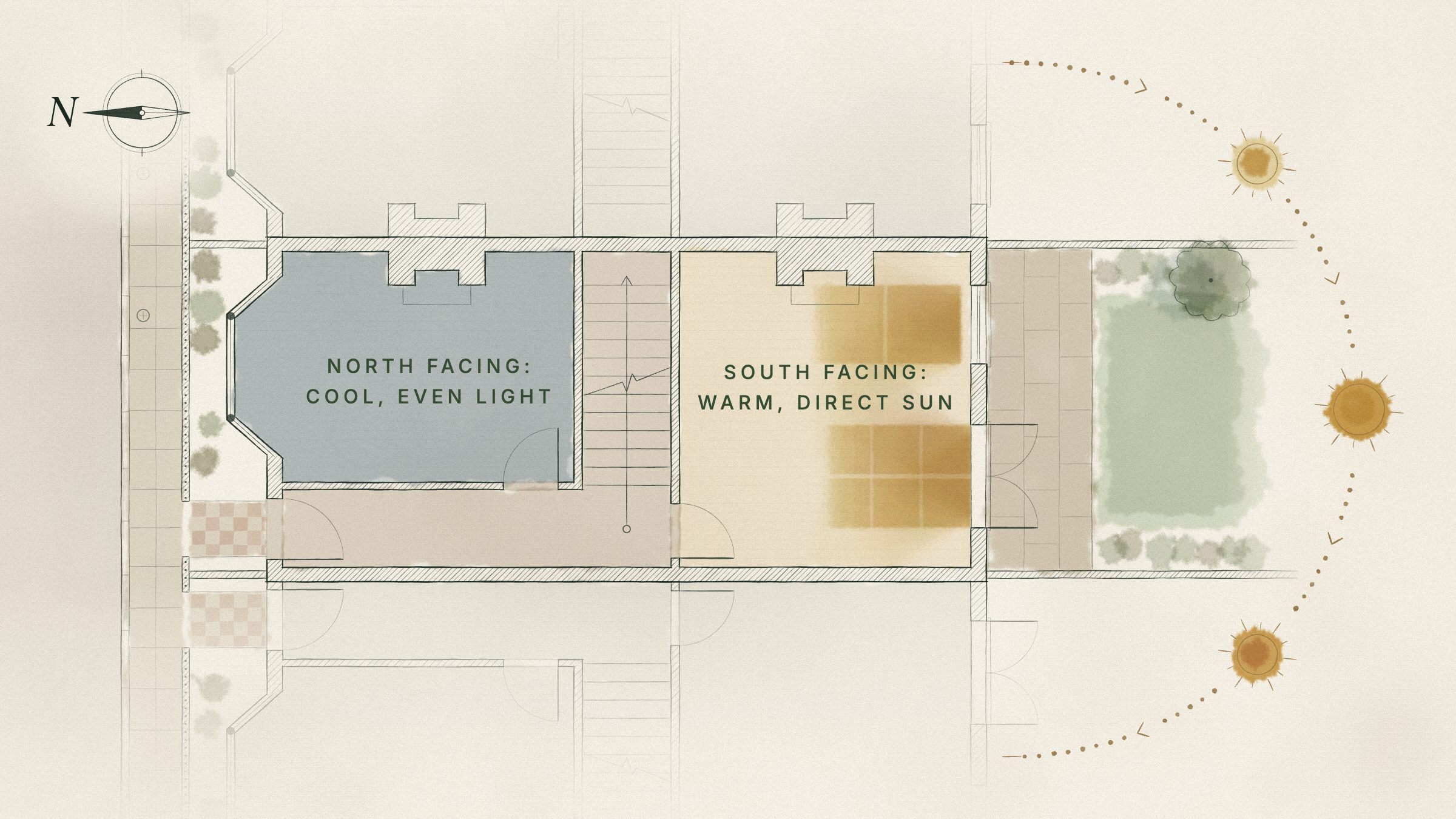
The same paint can look like two different colours in two rooms of the same house. The reason is the light: which way a window faces decides how much sun a room gets, when it gets it, and how warm or cool that light is. In London, where many houses are narrow and lit mainly from the front and the back, it matters more than most people expect.
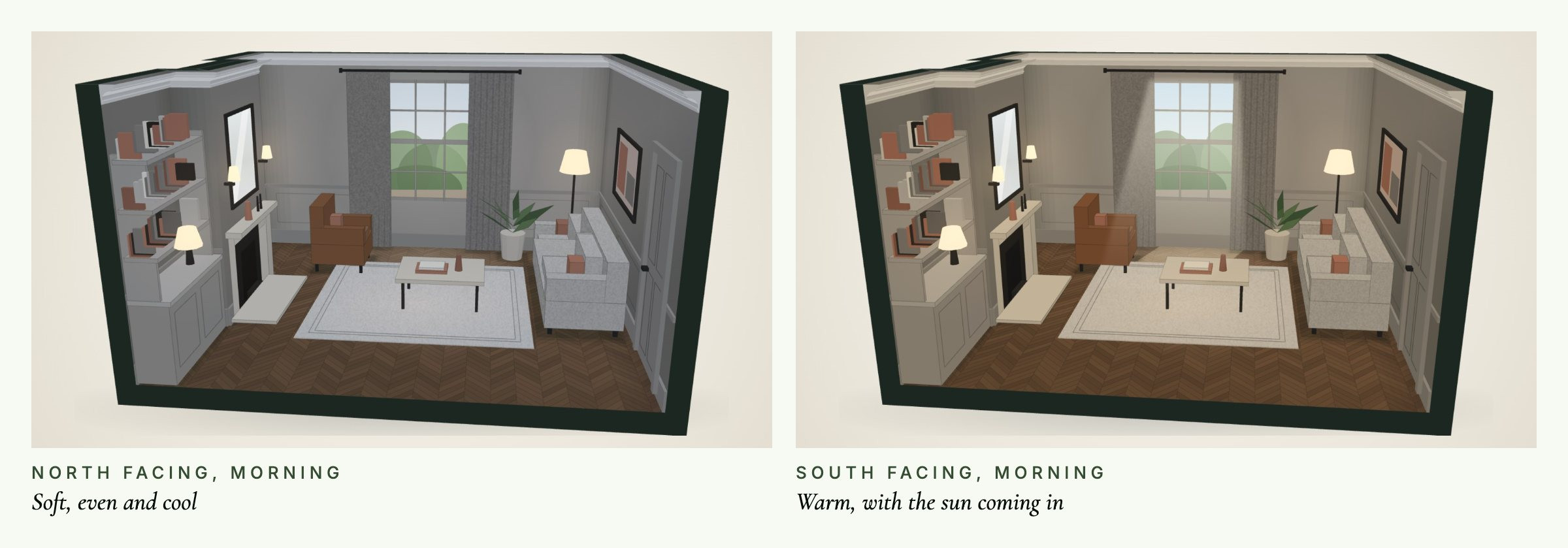
Here is how light changes colour, what tends to work in each kind of room, and how to test before you commit. You can switch between north and south light, morning and evening, in the Colour Room.
North facing rooms: cool, even light
A north facing room gets little or no direct sun, only a low sun early and late on summer days, so most of its light comes from the sky. It is soft and even through the day, but cool, so colours look a little bluer and greyer than on the card.
- Cool greys and icy blues can turn flat and cold. Greys with a warm undertone hold up far better.
- Warm colours come into their own: terracotta, ochre, plaster pink and warm whites.
- Deep colours are a good choice. Rather than fight the room's shade, an ink blue, a forest green or an oxblood makes it feel cocooning and deliberate.
South facing rooms: warm, strong light
A south facing room gets direct sun for much of the day. The light is warm and bright, so colours look warmer and lighter than on the card.
- Pale colours can look washed out in full sun. A little depth keeps them present.
- Cool colours are balanced by the warm light: sage, duck egg, soft blues and cool whites look fresh rather than chilly.
- Warm colours become very warm. A terracotta that glows in a north room can feel hot in a south one, so choose a slightly softer version.

East and west facing rooms
- East facing rooms get warm, bright morning sun, then cooler light for the rest of the day. Choose for when you use the room: a breakfast room can take cooler colours, a room used in the evening wants warmer ones.
- West facing rooms are cool in the morning and bathed in warm light in the late afternoon and evening. They suit colours that look good in both, and they are lovely for rooms you use at the end of the day.
After dark: lamplight changes everything
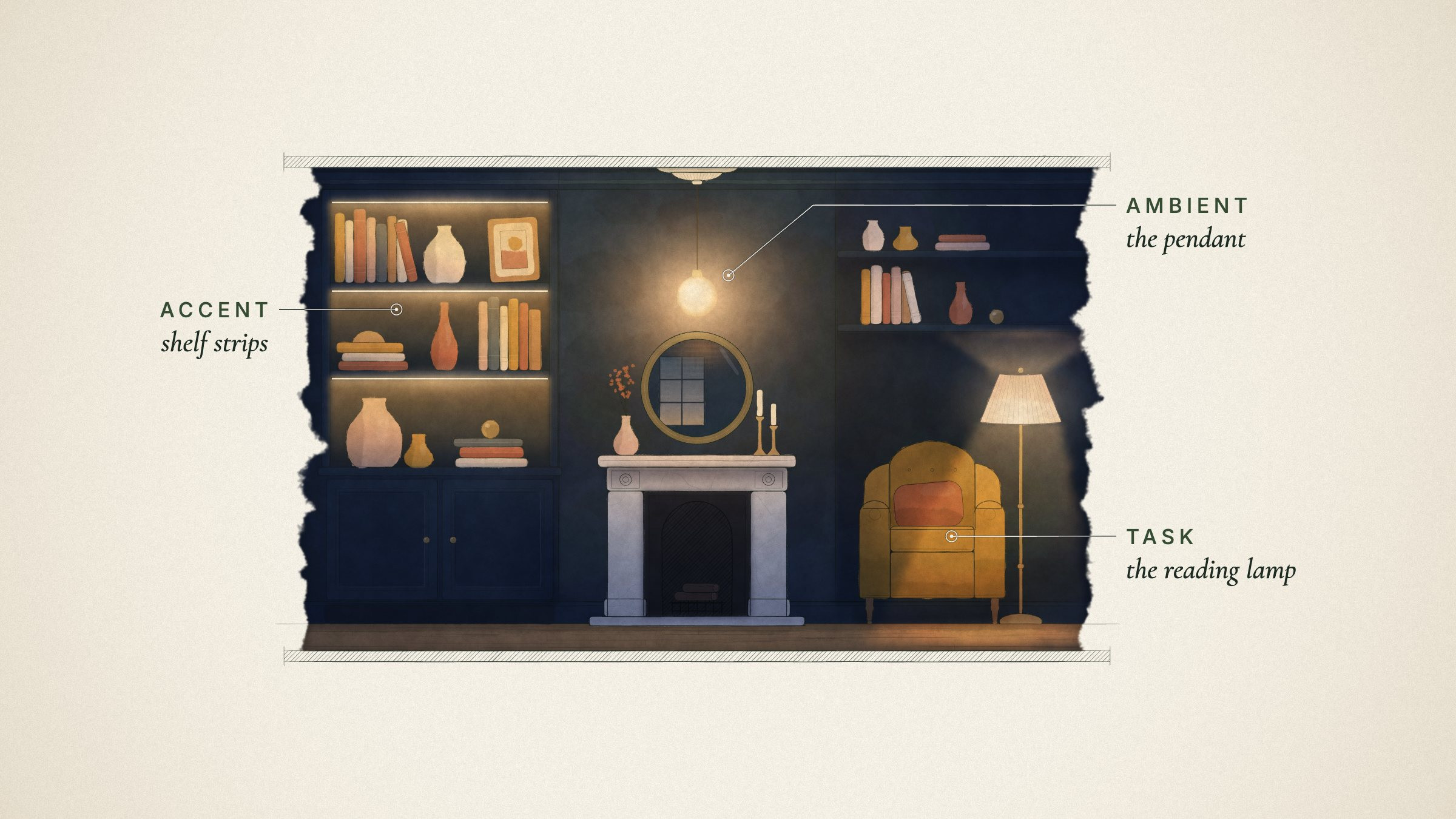
In the evening your lamps set the colour of the room. A few habits make a scheme look right after dark:
- Warm white bulbs, around 2700K, in living rooms and bedrooms. Cool white light makes warm colours look muddy and cool colours cold.
- Bulbs with a high colour rendering index, 90 or more, so colours look true.
- Light at three heights: ceiling or wall lights, table lamps, and a floor lamp, on dimmers.
Our guide to period home interiors covers layered lighting in more detail.
How to test a colour
Colours on a screen or a small card are only a guide. Before you commit:
- Paint samples at least A4 size, or use large sample boards, and try them on two walls: one that gets the light and one that does not.
- Look at them in the morning, at midday and in the evening, with the lamps on.
- Hold them next to the floor, the fabrics and the metal finishes you plan to use.
- Live with them for a few days before deciding.
Our interior design team matches colours to your own light and chooses the paints with you, as part of a design or a full design and build project.
Good to know
Frequently asked questions
- What colours work in a north facing room?
- Colours with a warm undertone: warm whites, plaster pink, terracotta, ochre and warm greys. Deep colours such as ink blue, forest green or oxblood also work well, making the room feel cosy rather than fighting its shade. Avoid cold greys and icy blues, which can turn flat.
- What colours work in a south facing room?
- Most colours, because the light is warm and bright. Cooler colours such as sage, duck egg and soft blue look fresh, and pale colours may need a little depth so they do not wash out.
- Why does my paint look different on the wall than on the card?
- The light is different. A small card under shop lighting is not the same as a whole wall in your room's own light, which changes with the direction the window faces and the time of day. Always test large samples at home.
- What bulbs should I use for a living room?
- Warm white bulbs, around 2700K, with a colour rendering index of 90 or more so colours look true, at several heights and on dimmers.
- Can I see how a colour changes with the light?
- Yes. In the Colour Room you can dress a room in a colour and switch between north and south facing, morning and evening, to see how the same scheme changes.