How to light a living room: layers, warmth and dimmers
· 5 min read
A living room works harder than almost any other room. It has to feel bright on a winter afternoon, calm in the evening, and right for reading, talking and the television, often on the same day. A single light in the middle of the ceiling cannot do all of that, which is why so many living rooms feel flat after dark.
The answer is to light it in layers, choose the colour of the light with care, and put it all on dimmers. Here is how, and what to plan before the walls are finished. In the Colour Room you can choose the ceiling lights, switch the lamps on and off, change the colour of the light and dim it, in a room dressed in your own colours.
Three layers of light
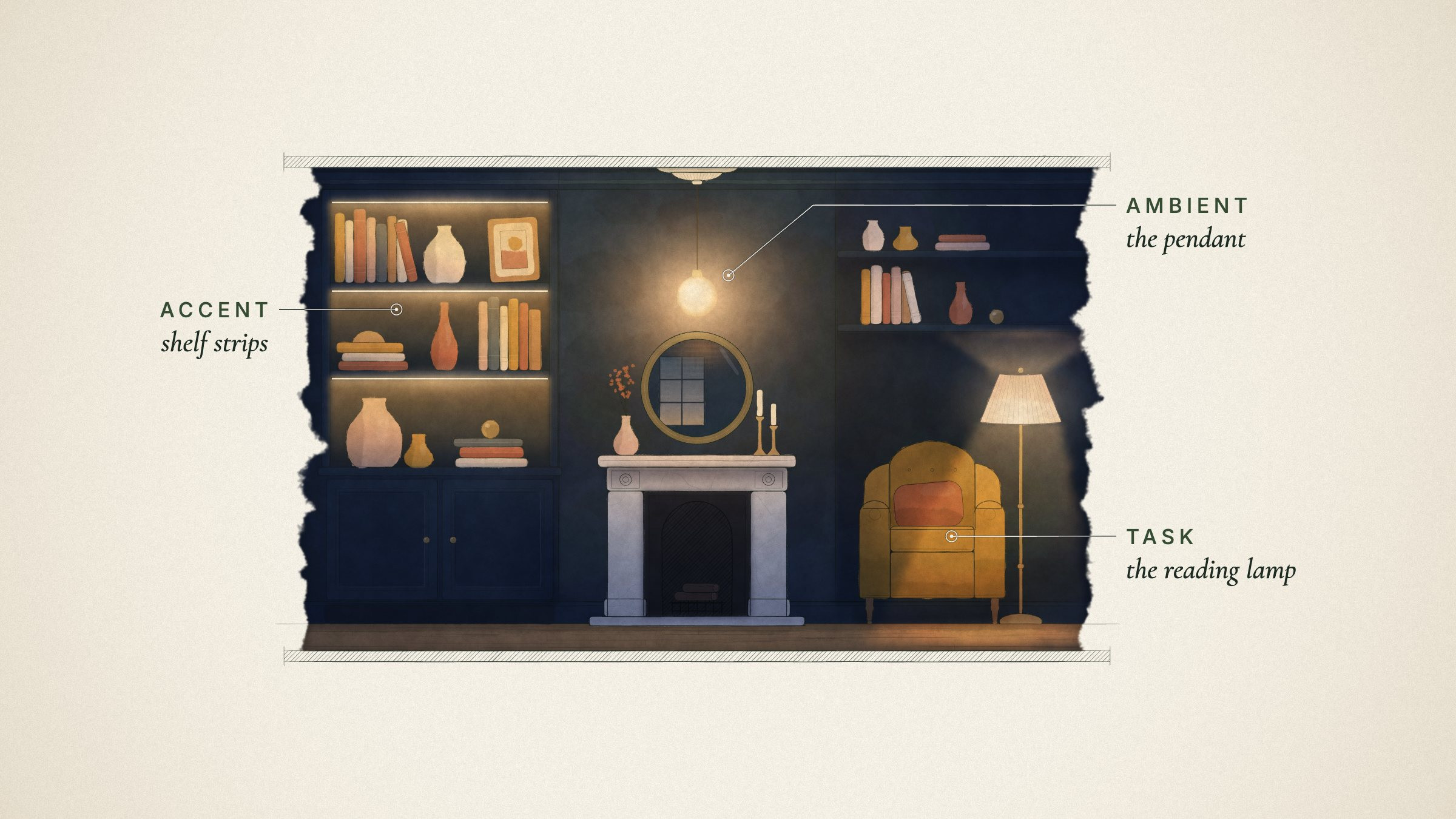
Designers think of lighting in three layers, each with its own job:
- Ambient light fills the room: a pendant or chandelier, downlights, wall lights.
- Task light is for doing things: a reading lamp by the armchair, a lamp on the desk.
- Accent light picks out what you want to see: shelves lit from within, a picture light, light washing a wall or a fireplace.
A room lit by one layer looks flat. A room lit by all three, each at a different height, has depth, and each layer can be turned up or down for the moment.
The ceiling: pendants, chandeliers and downlights
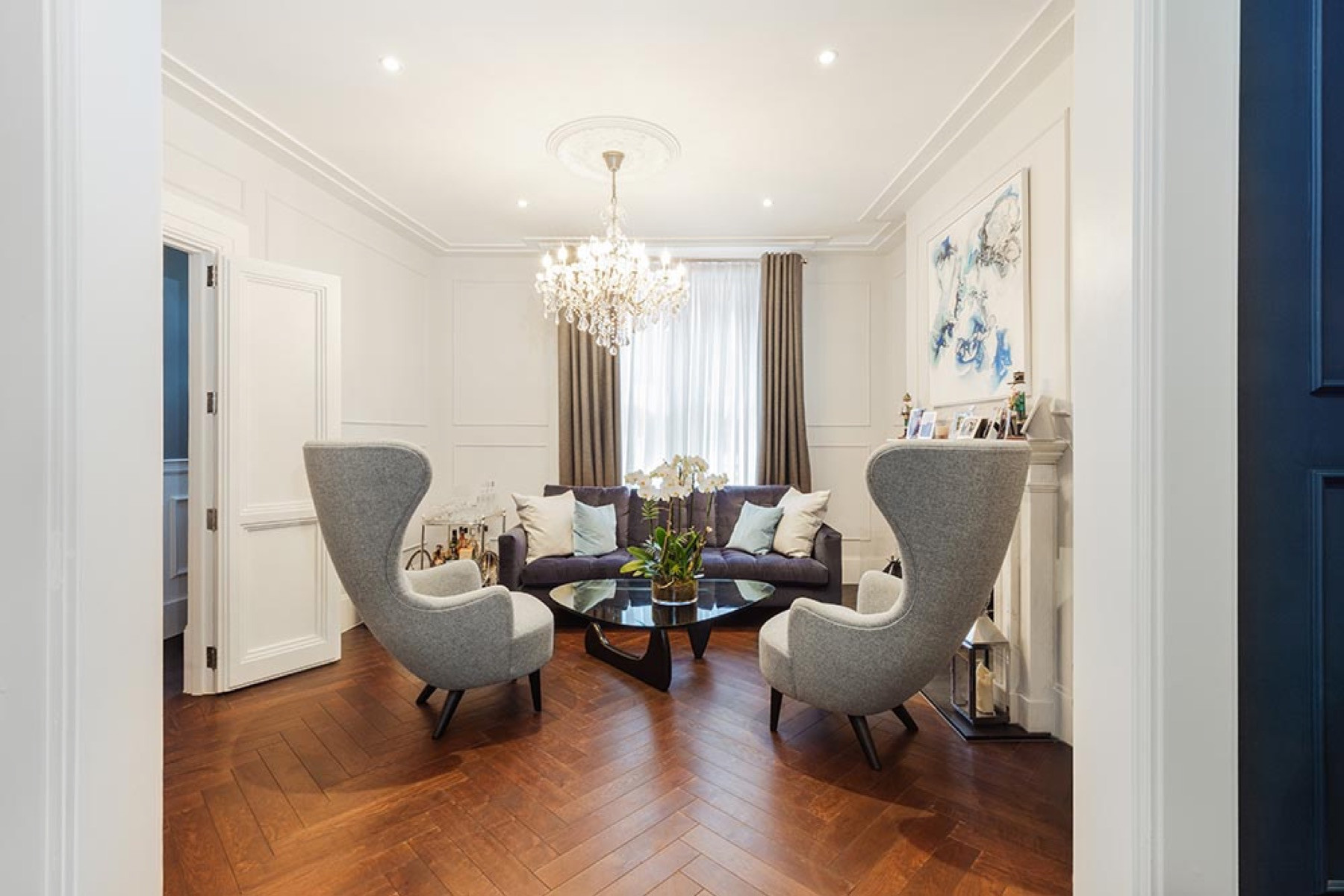
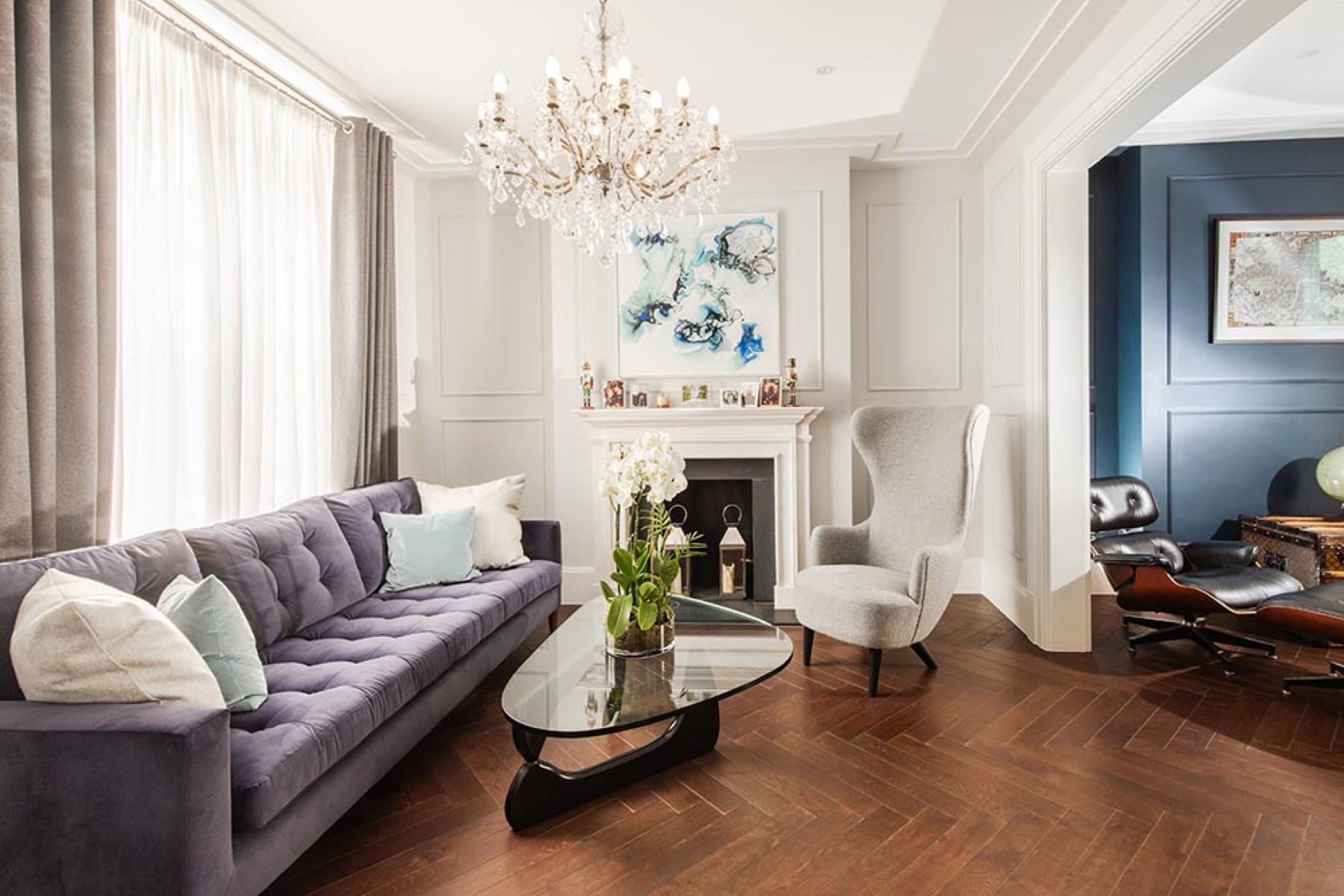
A pendant or a chandelier gives a room its centrepiece, and in a period room it belongs at the centre of the ceiling, often under a ceiling rose. Choose one sized to the room, and hang it high enough to walk under comfortably.
Downlights give even, practical light, but a grid of them across the ceiling makes a living room feel like an office. Used well, they have a job: a few near the walls to wash them with light, or over shelving and artwork. They can also sit alongside a pendant, one for the evening and the other for when the room needs to be bright.
Two practical points:
- Where there is a floor above, whether a neighbour's flat or a bedroom in your own house, the ceiling is part of the building's fire protection, and downlights must not weaken it. In most cases that means fire rated fittings; your electrician can confirm what the ceiling needs.
- Recessed lights mean cutting into the ceiling. An old lath and plaster ceiling, or one with an original cornice and rose, is often better left whole, with lamps and wall lights doing more of the work.
Wall lights and lamps
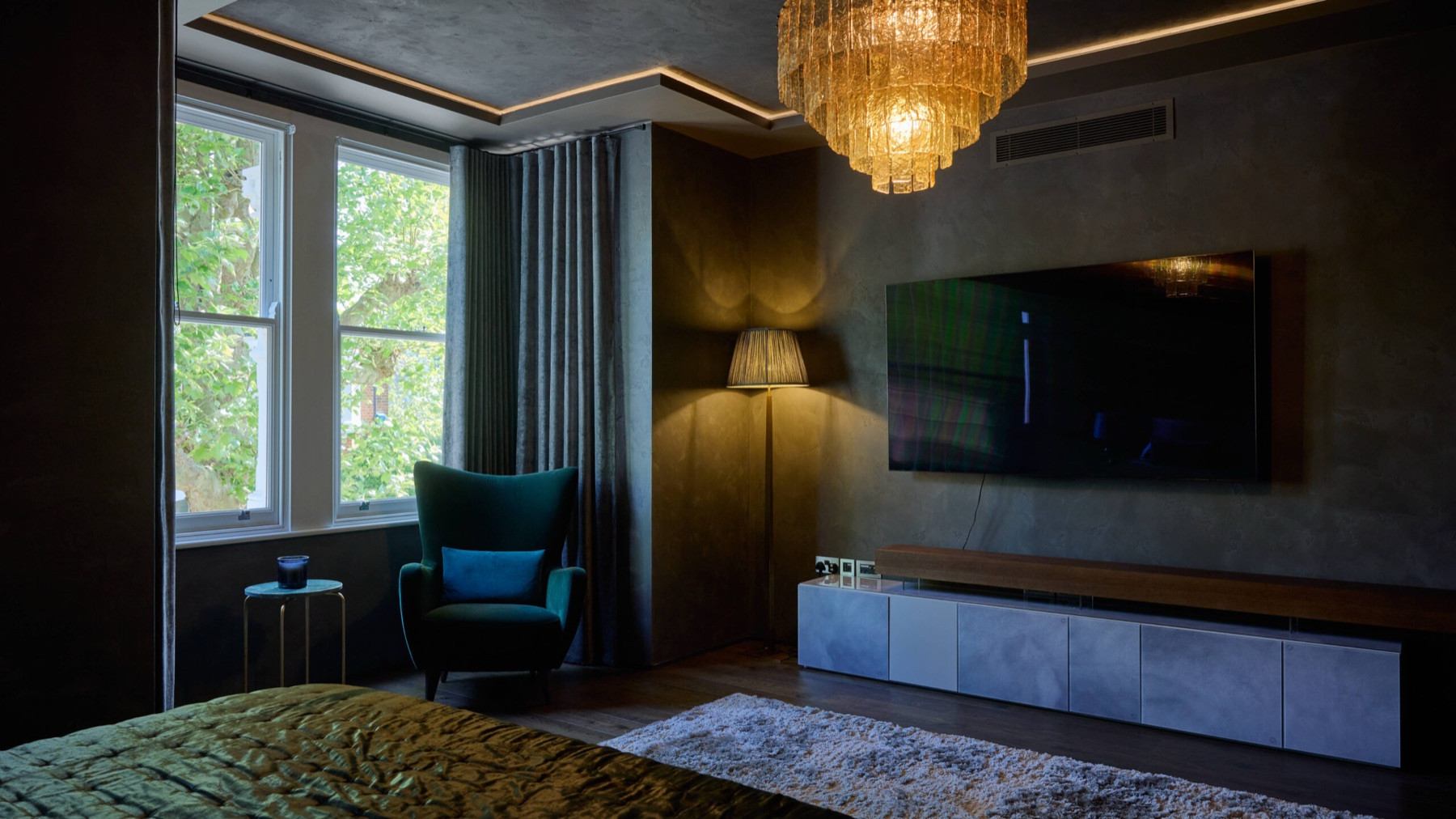
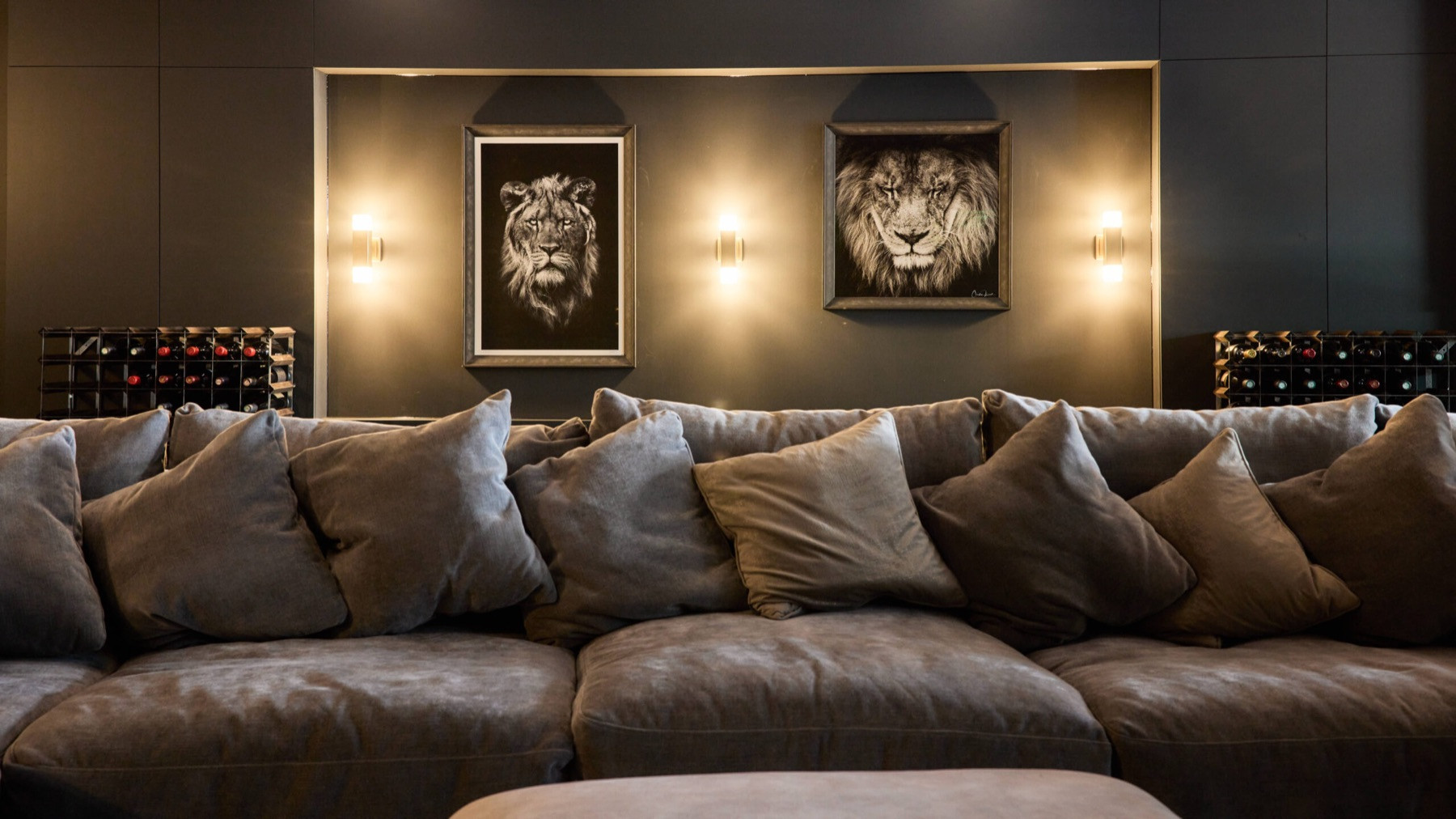
Wall lights bring the light down from the ceiling, to where people sit. They are usually placed in pairs, either side of a chimney breast, a mirror or a sofa, with the bulb shielded so you never look straight into it.
Lamps do the most for a living room in the evening. Table lamps and a floor lamp by the sofa make pools of warm light at the height of the people in the room, and that is what makes a room feel intimate rather than lit.
A detail worth asking your electrician for: 5 amp lamp sockets, the small round pin sockets on a circuit of their own, switched from the door. All the lamps then come on together with the wall switch, and nobody has to walk round the room turning them on one by one.
The colour of the light
White light comes in different colours, measured in kelvin:
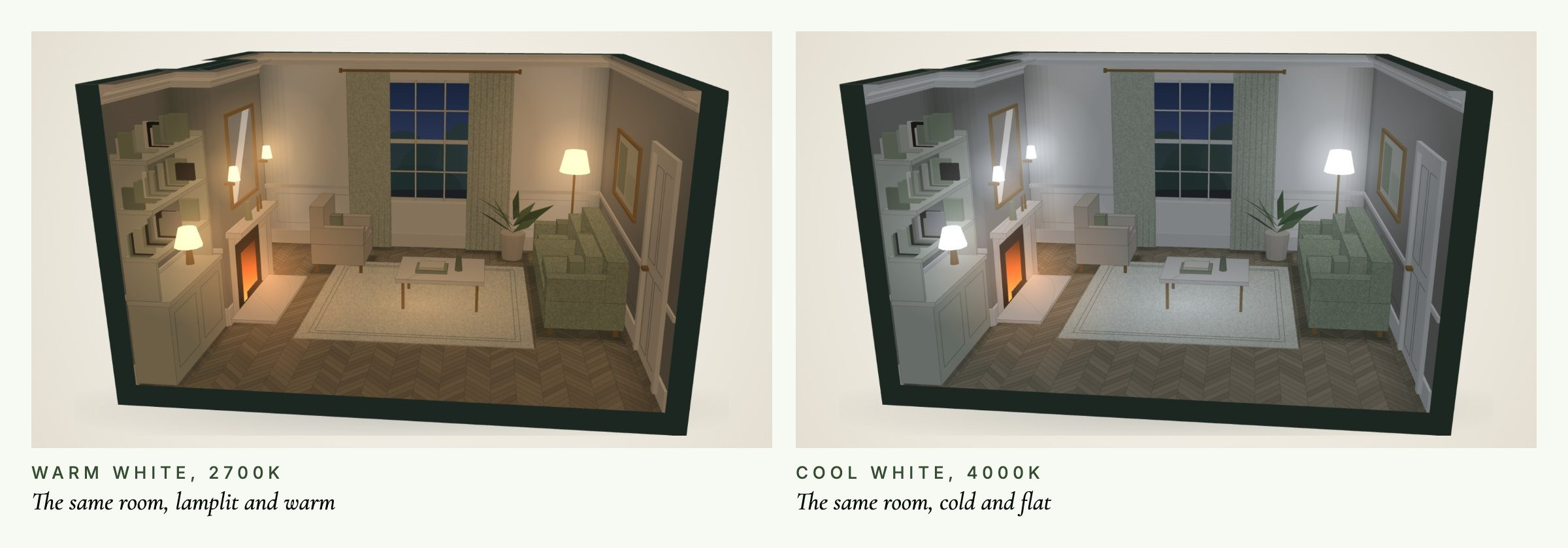
- 2700K is warm white, close to an old incandescent bulb. It is the right choice for most living rooms and bedrooms, and flatters most colours and skin.
- 3000K is a soft white, a little crisper, which some people prefer in a contemporary room.
- 4000K is a cool white, better suited to a kitchen worktop or a utility room than a living room. It makes warm colours look muddy and cool ones cold.
Use the same colour of light throughout the room, because a mix of warm and cool bulbs looks patchy. Look for a colour rendering index, or CRI, of 90 or more, so colours look true. Our guide to north and south facing rooms explains how daylight and lamplight change a colour.
Dimmers and circuits
Dimmers turn one set of lights into several moods. Put each layer on its own circuit, the ceiling lights, the wall lights and the lamps, so each can be set separately. Check that the dimmers suit LED bulbs, which usually need a trailing edge dimmer; a mismatch makes lights flicker or hum.
If you want to set scenes, such as bright for cleaning, soft for the evening and low for a film, a lighting control system can store them and set the whole room from one button.
Light and colour work together
The lighting and the colours should be chosen together, because each changes the other:
- Deep colours absorb light, so a dark room needs more lamps and wall lights than a pale one to feel welcoming. Lit well, a deep colour looks rich rather than dark.
- Pale colours reflect light, so a pale room can feel bright with less, but benefits from warm light in the evening so it does not look cold.
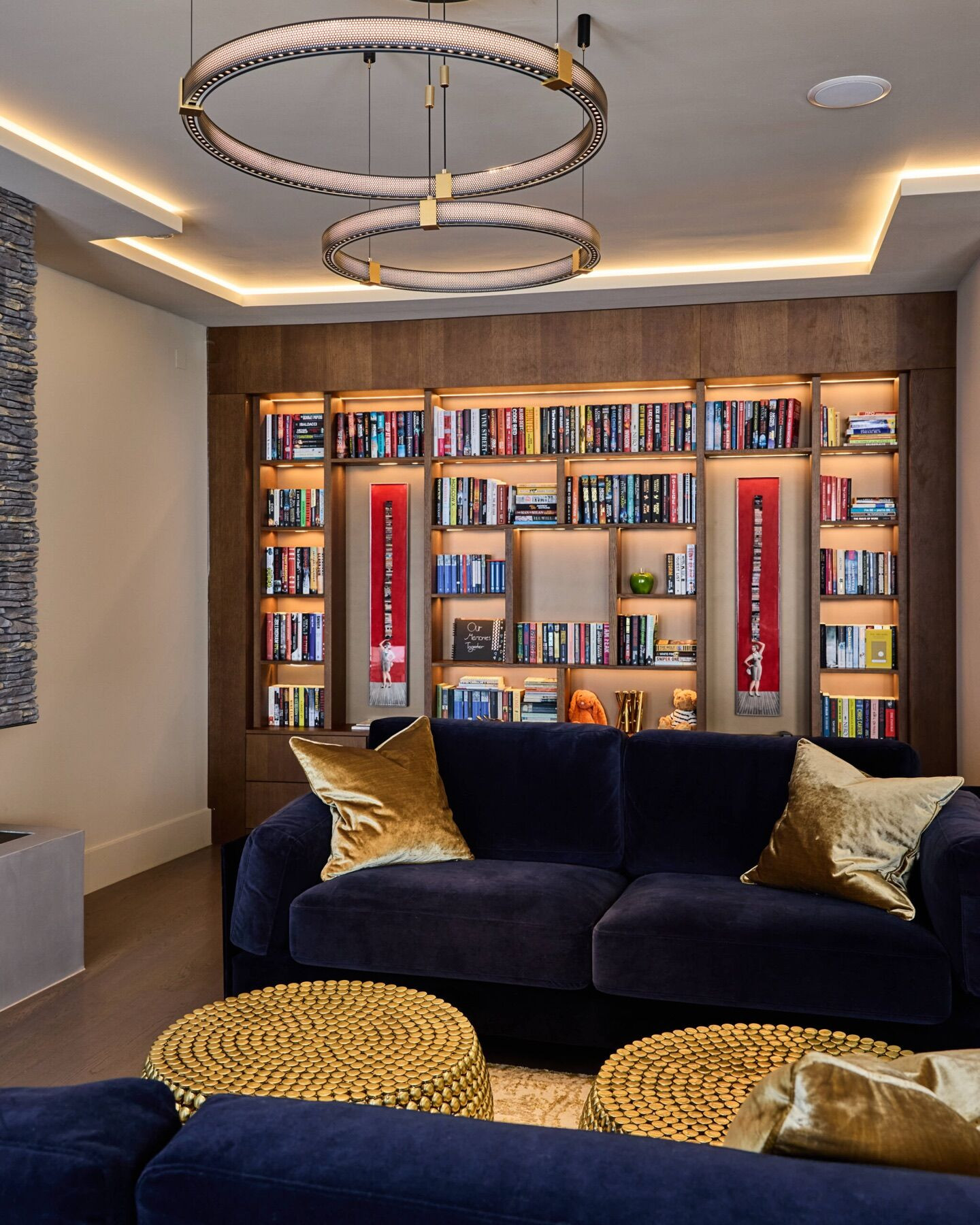
- Lit shelves, a lit alcove or a lit fireplace wall bring out the colour of the joinery around them.
At Woodside in Wimbledon, where we converted two flats into a single house, the shelves either side of the fireplace are lit from within, so the timber glows against the pale walls.

Plan it before the walls are finished
Most lighting decisions have to be made before plastering, while the wiring can still go anywhere:
- The position of every wall light, lamp socket and switch.
- Floor sockets for a lamp beside a sofa that stands in the middle of the room.
- Channels for LED strips in the joinery, and the drivers that power them.
- The circuits and the dimmers.
Once the walls are plastered and painted, moving a wall light means cutting into the wall and making good. Our guide to period home interiors covers layered lighting in an older house, and our interior design team plans the lighting with the joinery and the electrics from the start, as part of a design or a full design and build project.
Good to know
Frequently asked questions
- What colour temperature is best for a living room?
- Warm white, around 2700K, for most living rooms. Some people prefer a soft white of 3000K in a contemporary room. Choose bulbs with a colour rendering index of 90 or more, and use the same colour of light throughout the room.
- Are downlights a good idea in a living room?
- They are useful for even light and for washing walls, shelves and artwork, but on their own they make a living room feel flat. Use a few, alongside a pendant, wall lights and lamps, on dimmers. Wherever there is a floor above, in a flat or a house, they usually need to be fire rated, so they do not weaken the ceiling's fire resistance.
- What are 5 amp lamp sockets?
- Small round pin sockets on a circuit of their own, switched from the door, so the table and floor lamps come on together with the wall switch.
- Where should wall lights go?
- Usually in pairs, either side of a chimney breast, a mirror or a sofa, with the bulb shielded so you do not look straight into it. Plan their positions before the walls are plastered.
- Do LED bulbs work with dimmers?
- Dimmable LED bulbs do, with a dimmer designed for them, usually a trailing edge dimmer. A mismatched dimmer can make the lights flicker or hum.
- Can I see how lighting changes a room?
- Yes. In the Colour Room you can choose a pendant or a chandelier, with or without downlights, switch the lamps on or off, keep or remove the wall lights in a period room with a chimney breast, and change the colour of the light and dim it, in a room dressed in your own colours.